
Beyond Bubbles: Gold’s New Safety Role
Disclaimer: This article provides educational information on market trends and analysis based on public sources. It is not investment advice, financial recommendations, or endorsements. Gold and related markets involve risks; consult qualified professionals and conduct independent research before any decisions. Past performance does not predict future results.
By Doug Young – 10 December 2025
Introduction
Gold prices have surged more than 60% year-to-date in 2025, marking the strongest annual performance since 1979 and pushing spot prices above $4,000 per ounce.
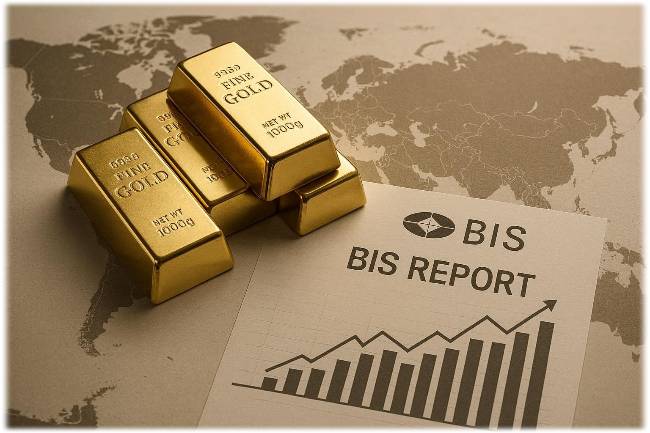
The Bank for International Settlements (BIS), the central bank for central banks, issued a rare warning on December 8, 2025, flagging gold alongside U.S. equities as entering “bubble territory”—the first such synchronized alert in 50 years.
This analysis explores whether the rally reflects speculative excess or fundamental shifts redefining gold’s role as a safe-haven asset amid evolving global risks.
BIS Bubble Warning Explained
Key Indicators Cited
The BIS highlighted gold’s 60% rise in 2025—over 150% since 2022—fueled by post-COVID inflation and geopolitical events like the Russia-Ukraine war.
Exchange-traded fund (ETF) shares traded at premiums to their net asset values (NAVs), indicating retail speculation and barriers to arbitrage.
The report noted “explosive behavior” in both gold and the S&P 500, particularly tied to AI-driven stock valuations, raising concerns about market fragility.
BIS Context and Broader Risks
This marks the BIS’s first bubble alert in half a century, describing a “double bubble” scenario.
Officials warned of self-reinforcing price dynamics, performative risk management, and correlated unwinds that could amplify losses when liquidity tightens.
Counterarguments: Not a Classic Bubble
Buyer Motives and Channels
Analysts argue gold lacks hallmarks of manias, such as ETF holdings reaching prior peaks or explosive surges in gold miner stocks.
Unlike speculative frenzies, gold draws buyers for its scarcity, broad acceptance, and position outside financial liability chains, rather than promises of a “new era.”
Decoupling from Traditional Models
Gold has risen even as real yields—adjusted for inflation—remained firm post-2022, breaking the long-held inverse relationship.
This suggests gold now hedges against political risks and counterparty vulnerabilities, extending beyond its traditional inflation-hedge role.
Central Bank Buying as Structural Driver
2025 Purchase Data
Central banks added a net 244 tonnes of gold in the first quarter of 2025, down 21% from 2024 but 25% above the five-year average; purchases rebounded to 19 tonnes in August.
This follows 1,044 tonnes in 2024—the third-highest on record—and marks the 16th consecutive year of net buying, far exceeding the 2010-2021 average of 473 tonnes.
Strategic Motivations
Institutions cite reserve diversification, resilience to sanctions, and holdings in non-cancellable assets amid de-dollarization trends.
Central banks control about 35,500 tonnes, or 17% of all gold ever mined, providing market stability through their long-term orientation.
Year Net Purchases (tonnes) Notes 2022 1,136 Record high 2023 1,050.8 Near record 2024 1,044.6 Third-highest 2025 Q1 244 Above average Geopolitical and Macro Factors
Redefining ‘Safe’ Assets
Geopolitical tensions have constrained access to reserves, elevating neutrality over pure liquidity in asset selection—qualities sovereign liabilities cannot uniformly provide.
A weaker U.S. dollar, down 10% year-to-date, and expectations of Federal Reserve easing further bolster prices.
Cyclical vs. Structural Forces
Cyclical factors include growth fears, dollar fluctuations, and momentum trading, while structural ones encompass sovereign risks and ongoing geopolitical stress.
Unlike the 1979 peak—when the U.S. was a net creditor with lighter debt burdens—today’s environment features record U.S. debtor status, structural deficits, lower policy rates, and reduced tolerance for prolonged tightening.
Historical Context and Market Implications
1979 Comparison
The 1979 rally stemmed from temporary inflation distortions, resolved by Federal Reserve Chair Paul Volcker’s aggressive rate hikes that restored credibility through economic pain.
Current conditions, with higher leverage and entrenched fiscal challenges, differ markedly and may sustain gold demand differently.
Potential Outcomes
Rapid advances can correct sharply if cyclical flows reverse or proxies like ETFs become crowded, though structural supports may limit downside.
The BIS emphasizes distinguishing physical bullion from leveraged financial instruments vulnerable to liquidity strains.
Conclusion: Evolving Role of Gold
Gold’s trajectory reflects a repricing of systemic credibility in an era of heightened adversarial risks, prompting debate over the durability of its drivers.
Financial decisions require review of multiple sources and consultation with qualified professionals.
Disclaimer: This article provides educational information on market trends and analysis based on public sources. It is not investment advice, financial recommendations, or endorsements. Gold and related markets involve risks; consult qualified professionals and conduct independent research before any decisions. Past performance does not predict future results.
 Discover Why Savvy Retirees are Diversifying Their Investment Portfolios With Gold
MEET THE RESEARCHER
Doug Young Financial Markets Researcher & Former Financial Director
- Over 20 years of experience in financial markets
- More than 15 years specializing in Gold IRAs
- Extensive expertise in precious metals trading
- Former Financial Director at World Freight Services Ltd for 16 years.
- Author of 500+ published financial research articles over 10 years
- Conducted 80+ Gold IRA company evaluations since 2011


