
Gold Has Breached $5000 – Should You Sell?
Disclaimer: This article provides educational information on market trends and is not investment advice. Consult a qualified financial advisor before making decisions. Past performance does not guarantee future results.
By Doug Young – 26 January 2026
Introduction
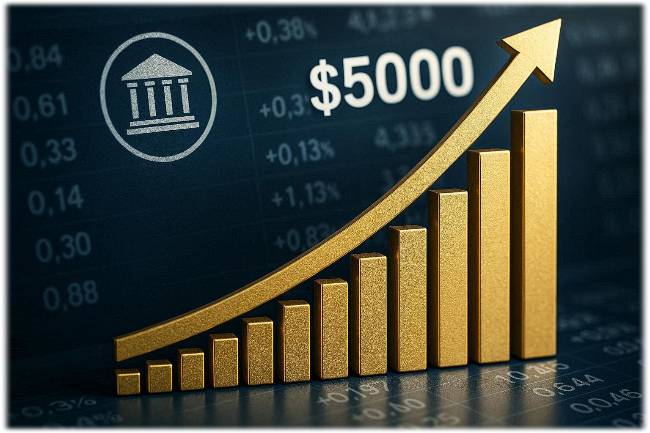
Spot gold has surpassed $5,000 per ounce for the first time, trading, at the time of writing, at $5,046 on January 26, 2026, amid a 0.88% daily increase.
This milestone caps a swift rally from $4,800 levels earlier in the month, propelled by safe-haven demand and institutional accumulation.
As prices climb, observers examine whether such highs signal opportunities to exit positions or underscore gold’s enduring role in uncertain times.
Gold’s Record Surge Explained
Price Trajectory
Gold’s ascent accelerated from $4,800 on January 22 to over $5,000 today, reflecting heightened global tensions and fiscal strains.
Forecasts vary, with HSBC having already projected $5,000 in the first half of 2026 and Goldman Sachs anticipating $5,400 by December, supported by Western ETF inflows totaling 500 tonnes since the start of 2025.
Key Drivers
Central banks purchased 297 tonnes of gold in the first 11 months of 2025, including 45 tonnes in November alone, with estimates pointing to 755 tonnes for 2026—well above pre-2022 averages.
Emerging markets continue leading this diversification away from fiat currencies, while policy risks such as U.S. debt refinancing bolster demand for hedges against systemic fragmentation.
Institutional Signals: Central Banks vs. Individuals
Central Bank Strategies
Poland’s central bank holds over 500 tonnes as of late 2025, aiming for 30% of reserves after approving a 150-tonne purchase plan in January 2026 to rank among the global top 10.
Worldwide, central banks average 60 tonnes monthly, favoring gold for its lack of counterparty risk, particularly after the 2022 immobilization of Russia’s reserves.
Japan’s rising bond yields further illustrate challenges to traditional debt sustainability as the largest holder of U.S. Treasuries.
Lessons for Households
Central banks focus on long-term preservation across cycles, unburdened by immediate liquidity or tax considerations that shape individual decisions.
Elevated prices often reflect a repricing of declining system confidence rather than newfound stability, highlighting a growing divide between wealth preservation and accumulation strategies.
When Do Investors Consider Selling?
Factors from Analysis
Market participants weigh personal factors such as rebalancing allocations that have expanded disproportionately, addressing known liabilities, managing tax implications, or shifting to other tangible assets—distinct from reactions to short-term price swings.
The key evaluation centers on whether the original rationale for holding gold, as a hedge against broader uncertainties, remains intact.
Historical and Market Context
Gold has experienced corrections after major rallies in past cycles, though sustained central bank buying has often limited downside.
Silver Parallel
Silver’s parallel surge to over $108 per ounce today, up 4%, underscores related volatility, driven by industrial applications in AI and solar energy.
Current Market Backdrop
Geopolitical and Fiscal Pressures
The U.S. confronts substantial debt refinancing amid buyers demanding higher compensation, while tariff threats test longstanding transatlantic financial assumptions.
Sovereign debt markets show bonds losing automatic refuge status, with investors seeking alternatives amid fiscal and policy uncertainties.
Expert Perspectives and Data Sources
Analysts at Union Bancaire Privée had already forecast $5,000 by year-end, citing retail and central bank demand, while J.P. Morgan observes elevated but steady central bank activity.
Reliable tracking comes from World Gold Council statistics and London Bullion Market Association pricing data.
Forward Outlook
A structural bull cycle may persist toward $5,400 or higher if geopolitical and fiscal risks endure, with monthly central bank purchases around 60 tonnes and ETF flows as critical indicators.
Investors monitoring reserve compositions and World Gold Council updates gain insights into evolving stability signals.
Educational Close
Gold’s breach of $5,000 illustrates shifting financial hierarchies amid global challenges. Primary sources like central bank reports and official price data provide essential context for understanding these dynamics.
Disclaimer: This article provides educational information on market trends and is not investment advice. Consult a qualified financial advisor before making decisions. Past performance does not guarantee future results.
 Discover Why Savvy Retirees are Diversifying Their Investment Portfolios With Gold
MEET THE RESEARCHER
Doug Young Financial Markets Researcher & Former Financial Director
- Over 20 years of experience in financial markets
- More than 15 years specializing in Gold IRAs
- Extensive expertise in precious metals trading
- Former Financial Director at World Freight Services Ltd for 16 years.
- Author of 500+ published financial research articles over 10 years
- Conducted 80+ Gold IRA company evaluations since 2011


