
Gold Hits $4,000, Signals Financial System Shift
Disclaimer: This article is for informational purposes only and does not constitute financial or investment advice. Readers should conduct their own research or consult a qualified professional before acting.
By Doug Young – 12 October 2025
Introduction
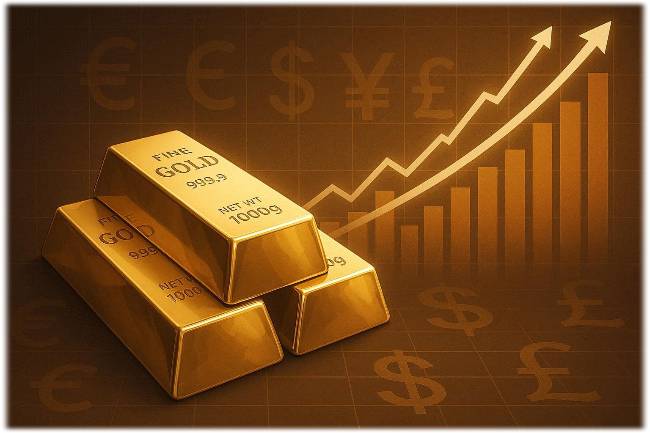
Gold prices have recently surpassed the $4,000 per ounce mark for the first time in history, a milestone reached in October 2025 that reflects more than just a financial rally.
This historic price point identifies significant shifts and stresses within the global economic and monetary system. Gold, long regarded as a safe-haven asset, is increasingly being viewed as a broad indicator of systemic risk and declining confidence in fiat currencies and sovereign debt.
This news item explores the underlying factors driving this price movement, the implications for the global financial landscape, and the evolving role of gold in the modern economy.
Record Gold Price and Market Reaction
The price of gold breaking the $4,000 milestone has drawn considerable attention across financial markets. This surge makes gold one of the best performing assets in 2025 amid rising volatility in equities, bonds, and currencies.
The increase is largely propelled by investor demand for safety amid mounting geopolitical tensions and economic uncertainties worldwide.
While gold remains volatile in the short term with technical indicators suggesting some overbought conditions, the sustained upward momentum reflects deep-rooted drivers beyond mere speculation.
Economic and Geopolitical Factors Driving Gold Prices
Economic Uncertainties
Global economic instability continues to provide a backdrop for the gold rally.
- Total global debt exceeds 256% of world GDP, causing concerns about long-term sustainability.
- Persistent inflation has forced central banks into restrictive monetary policies, increasing debt servicing burdens for governments and corporations alike.
- Political gridlock and fiscal policy uncertainty, exemplified by recent US government shutdowns, add layers of unpredictability to financial markets, encouraging capital flows into tangible assets like gold.
Geopolitical Risks
Geopolitical tensions further influence gold’s appeal as a safe haven.
- Ongoing trade disputes, such as US-imposed tariffs and trade wars, create uncertainty in global commerce.
- Protracted conflicts like the Russia-Ukraine war and unrest in the Middle East exacerbate risk premiums.
- Political instability in major economies, including governments in France and Japan facing internal challenges, also feeds investors’ preference for assets perceived as stable and reliable stores of value.
Monetary System Shifts and Currency Dynamics
Declining Confidence in Fiat Currencies
A significant contributor to gold’s price appreciation is the weakening confidence in fiat currencies, chiefly the US dollar. The dollar has lost approximately 10% of its value in the first half of 2025, marking its worst performance in half a century.
Factors influencing this decline include slower economic growth in the US, growing fiscal deficits, and persistent uncertainty surrounding monetary and fiscal policy direction.
This erosion in purchasing power fuels demand for alternatives that protect wealth from inflation and currency devaluation.
Shift Toward Physical Assets
Central banks worldwide have responded by increasing their gold reserves, diversifying away from reliance on the US dollar.
Regulatory frameworks such as Basel III have altered the treatment of gold on banks’ balance sheets, favoring allocated physical gold over unallocated or paper gold due to its lack of counterparty risk.
Simultaneously, Asia is becoming a pivotal player in the gold market, with alternative monetary centers and physical gold trading platforms gaining prominence.
Shanghai’s gold futures exchange, which now offers global settlement options, exemplifies efforts to establish a more sovereign and independent financial infrastructure.
Role of Central Banks and Institutional Investors
Central banks continue to be major buyers of gold, with recent purchases driven by countries including Poland and several Asian economies. These acquisitions serve to hedge against currency risks and provide stability amid financial uncertainties.
Institutional investors are also recalibrating portfolios, reducing allocations to bonds and other paper assets in favor of gold.
Furthermore, gold’s role is evolving from merely a store of value to becoming a viable collateral asset in repo and swap markets, which enhances liquidity without requiring physical liquidation of reserves.
Implications for Global Financial Stability
The rising gold price acts as an economic “thermometer,” signaling broader systemic risks rather than a transient speculative bubble. This monetary repricing reflects a collective reassessment of what constitutes a truly risk-free asset, given increasing doubts over sovereign debt safety and central bank credibility.
While market volatility and policy interventions may cause price fluctuations, the enduring trend towards gold as a monetary anchor suggests profound structural changes in the global financial ecosystem.
Educational Note: Understanding Gold’s Safe-Haven Role
Gold’s historical role as a crisis hedge has endured across centuries as a stable store of value when trust in currencies and governments falters.
It is important to distinguish between allocated gold—which is physically held and owned outright by investors—and unallocated gold, which represents claims against a dealer’s holdings and carries counterparty risk.
Basel III regulations, effective in recent years, recognize allocated gold as a high-quality liquid asset (HQLA), improving its standing in regulatory capital frameworks and influencing bank balance sheets and investment behaviors.
Conclusion
The breakthrough of gold above $4,000 per ounce stands as a significant signal of structural shifts within the global monetary and financial system. Economic uncertainty, geopolitical instability, currency devaluation, and regulatory changes collectively underpin this development.
The evolving landscape suggests that while gold’s price will experience fluctuations, its importance as a monetary anchor and safe-haven asset is likely to endure. This moment invites careful observation of economic indicators and monetary policies, emphasizing education over speculation.
Disclaimer: This article is for informational purposes only and does not constitute financial or investment advice. Readers should conduct their own research or consult a qualified professional before acting.
 Discover Why Savvy Retirees are Diversifying Their Investment Portfolios With Gold
MEET THE RESEARCHER
Doug Young Financial Markets Researcher & Former Financial Director
- Over 20 years of experience in financial markets
- More than 15 years specializing in Gold IRAs
- Extensive expertise in precious metals trading
- Former Financial Director at World Freight Services Ltd for 16 years.
- Author of 500+ published financial research articles over 10 years
- Conducted 80+ Gold IRA company evaluations since 2011


