
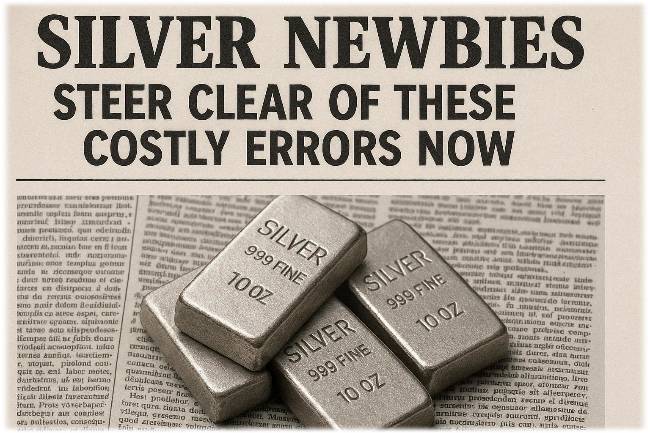
Silver Newbies: Steer Clear of These Costly Errors Now
Disclaimer: This article provides general educational information on silver markets and is not investment advice. Consult qualified financial professionals before making decisions. Past performance does not guarantee future results.
By Doug Young – 05 March 2026
Silver prices have surged dramatically in early 2026, hitting January highs near $122 per ounce before sharp corrections amid futures market pressures.
This volatility highlights risks for U.S. beginners eyeing physical silver as a portfolio component.
This article details seven prevalent errors drawn from recent market observations, offering factual educational context without endorsing specific actions.
Market Context in Early 2026
Silver’s appeal stems from its roles in industry—such as solar panels and electronics—and as a store of value, driving year-to-date gains exceeding 160%.
The gold-silver ratio tightened to roughly 57:1 by early March, signaling silver’s relative outperformance against gold.
January pullbacks reflected deleveraging in COMEX futures and broader economic factors.
Mistake 1: Chasing Hype Without a Clear Goal
Novice U.S. investors often buy after rapid rallies, overlooking whether silver suits long-term diversification or tactical positioning. Unrelated corrections, like futures squeezes, trigger emotional sales.
Define objectives: Long-term hold vs. short-term plays
Participants weigh enduring multi-year volatility against shorter-term market timing, each demanding distinct approaches.
Historical lesson: Ratios above 80:1 historically favor silver
High ratios have correlated with subsequent silver rallies, though history offers no guarantees.
Mistake 2: Panicking Amid Volatility
2026’s extreme swings—FOMO-driven spikes and margin-call drops—have exposed timing vulnerabilities. Spot prices stabilized near $84 per ounce in early March post-peak.
Expect drawdowns: Use position sizing or gradual entry
Even bullish phases include 10-20% retreats, a pattern evident in silver’s price history.
Data point: Monthly gains of 20%+ amid corrections
Substantial monthly advances persisted through 2026 pullbacks, underscoring the asset’s variability.
Mistake 3: Overlooking Premiums and True Costs
Buyers citing spot prices neglect premiums, which reached 5-20% over spot on U.S. bullion during demand surges. Dealer margins and shipping compound expenses.
Compare dealers: Track total cost basis
Online and local dealers show premium variance; full landed cost analysis reveals true economics.
2026 trend: Premiums elevated post-rally
Supply bottlenecks post-January kept premiums above norms for coins and bars.
Mistake 4: Selecting Illiquid Products
Non-standard silver products like generic rounds incur steep resale penalties due to verification hurdles. U.S. Mint coins dominate secondary markets for liquidity.
Liquidity benchmarks: IRA-eligible coins trade easily
American Silver Eagles and similar IRA-approved items trade globally with tight spreads.
Avoid: Collectibles unless for numismatics
Numismatic values hinge on condition and rarity, not spot metal content.
Mistake 5: Neglecting Storage Logistics
A 500-ounce monster box (~30kg) challenges home safes; theft and insurance gaps loom large. U.S. depositories like Delaware or Texas vaults provide allocated options.
Home vs. professional: Vaults cover bulk allocations
Professional storage segregates holdings with full insurance for substantial positions.
Costs: Vary by facility; insured storage ~0.5-1% annually (estimates)
Fees typically scale from 0.5% to 1% of value yearly, lower for larger stacks.
Mistake 6: Ignoring Location-Specific Taxes and Fees
U.S. sales tax applies at purchase in most states (0-10% range), absent for some stored bullion; long-term capital gains tax hits sales profits. No federal VAT exists, unlike abroad.
U.S.: Sales tax varies by state; stored bullion often exempt
State rules defer taxes on vaulted metal; consult local regulations.
Global: Research local rules pre-purchase
Cross-border buying triggers duties; domestic focus simplifies compliance.
Mistake 7: Mixing Paper Exposure with Physical Ownership
Silver ETFs like SLV offer price tracking without delivery, but counterparty risks emerge in crises. Physical bullion ensures possession amid delivery failures.
Match to goals: Paper for trading, physical for insurance
Liquid ETFs suit frequent trades; bars/coins align with tangible asset strategies.
2026 note: Spot benchmarks claims, not delivery
COMEX spot prices reference paper claims, not guaranteed physical settlement.
Additional Educational Insights
Current Metrics Table
Metric Value (Early March 2026) Spot Price ~$84-85/oz YTD Gain ~162% Gold-Silver Ratio ~57:1 Peak (Jan 2026) $121.64/oz Dollar-cost averaging spreads purchases over time to average costs, a technique noted in financial education.
Monitoring ratios and premiums contextualizes opportunities and frictions.
Conclusion: Key Educational Takeaways
Defining goals, tallying full costs, and securing storage mitigate silver’s volatility challenges. U.S. tax nuances, like state sales levies, merit scrutiny. Historical trends inform but do not predict; independent research and professional input are prudent.
Disclaimer: This article provides general educational information on silver markets and is not investment advice. Consult qualified financial professionals before making decisions. Past performance does not guarantee future results.
 Discover Why Savvy Retirees are Diversifying Their Investment Portfolios With Silver
MEET THE RESEARCHER
Doug Young Financial Markets Researcher & Former Financial Director
- Over 20 years of experience in financial markets
- More than 15 years specializing in Gold IRAs
- Extensive expertise in precious metals trading
- Former Financial Director at World Freight Services Ltd for 16 years.
- Author of 500+ published financial research articles over 10 years
- Conducted 80+ Gold IRA company evaluations since 2011


