
Tariffs Trigger Gold Futures Turmoil, Physical Gold Stable
Disclaimer: This article is for informational purposes only and does not constitute financial, investment, or legal advice. Readers should consult professionals before making any financial decisions.
By Doug Young – 13 August 2025
Introduction
The global gold market recently experienced significant volatility due to a U.S. government policy announcement regarding tariffs on certain gold bars.
This unexpected development sparked turmoil in gold futures trading, particularly on the COMEX exchange in New York, while physical gold holdings remained stable.
Understanding the distinction between paper gold instruments and physical gold is essential to grasp the market dynamics and the implications of this policy shift.
Background: Gold Market Structure
Gold trading operates primarily through two major markets: the COMEX futures market in New York and the London spot market.
COMEX futures contracts typically require physical delivery of gold bars of 1 kilogram or 100 ounces, usually refined and recast in Switzerland—a critical hub in the global gold refining process.
Traditionally, gold has been classified more as a financial instrument or store of value rather than a physical commodity subject to import tariffs, which has allowed relatively seamless international trade flows supporting futures contracts.
Trigger Event: U.S. Tariff Letter and Policy Announcement
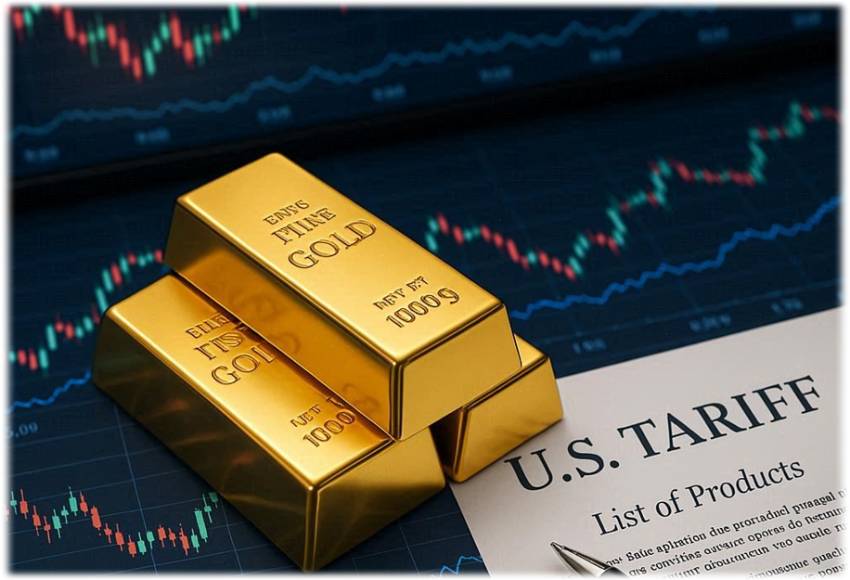
The disruption began on July 31, 2025, when the U.S. Customs and Border Protection issued a letter indicating that 1-kilogram and 100-ounce gold bars imported into the United States would be subject to tariffs under the Trump administration’s reciprocal tariff policy, including a steep 39% tariff on gold bars originating from Switzerland.
This tariff announcement went against the longstanding expectation that gold bullion would remain exempt from such duties.
The market reacted swiftly, with COMEX gold futures surging to record highs near $3,530 an ounce, creating a remarkable price divergence from the London spot market price.
The sharp spike reflected traders’ attempts to price in the increased costs and logistical challenges posed by the tariffs.
Market Impact and Mechanisms
The tariffs imposed a significant disruption to the physical delivery supply chains that underpin futures markets.
Swiss refiners, who play a pivotal role in recasting large London bars into COMEX-deliverable sizes, paused shipments as the tariffs made U.S. deliveries uneconomical.
This caused the usual alignment between futures prices in New York and spot prices in London to break down, since physical gold supply to meet futures contracts was constrained.
The resulting decoupling led to increased market volatility and forced bullion banks and traders engaged in leveraged “carry trades” to rapidly unwind positions, further amplifying price swings.
Additionally, the increased complexity and cost of transporting and insuring gold shipments across borders raised logistical challenges.
Clarifications and Developments
Following the initial turmoil, President Donald Trump announced that gold would be exempted from the tariffs, intending to clarify the policy through an executive order addressing the confusion.
This announcement caused futures prices to fall from their peak, but uncertainty lingered as the market awaited formal policy details.
Market participants are also closely watching U.S. inflation reports and Federal Reserve interest rate signals, which significantly influence gold demand. The evolving macroeconomic backdrop adds further layers of complexity to the gold market outlook.
Broader Global Implications
The tariff threat reshapes global gold supply chains by challenging Switzerland’s dominant refining and transit hub status.
Switzerland’s exposure to a 39% tariff has raised concerns about the viability of its gold export volumes to the U.S., prompting speculation that alternative sourcing and refining hubs may emerge to bypass tariff constraints.
While domestic U.S. gold refining capacity could theoretically benefit from reduced imports, current infrastructure is insufficient to fully replace international supply chains.
This realignment of trade flows and refining centers could lead to lasting structural changes in the global gold market.
Physical Gold Stability versus Paper Gold Volatility
Despite significant upheaval in paper gold futures markets, allocated physical gold holdings remained stable as they are not subject to tariff risks or settlement disruptions.
Investors holding physical gold outside the banking system in trusted jurisdictions were insulated from the policy-driven volatility affecting COMEX futures.
This contrast highlights the risks inherent in exposure to paper gold instruments like futures and exchange-traded funds (ETFs) during periods of geopolitical or regulatory shocks.
Physical gold’s inherent nature as a tangible asset secures it against the operational bottlenecks encountered by paper-based contracts.
Educational Insights for Readers
It is important to distinguish between short-term price volatility, which can be driven by policy announcements or market technicalities, and permanent risk or capital loss.
Market structures and geopolitical factors can differently impact asset categories, underscoring the complexity of global trade policies affecting commodities.
Readers should approach gold market developments with an understanding of these nuances and seek comprehensive information. This article does not offer investment advice but aims to educate about the mechanics and influences shaping today’s gold market environment.
Conclusion
The recent U.S. tariff announcement triggered unprecedented turmoil in gold futures markets by disrupting physical gold delivery mechanisms.
Despite that, physical gold itself remained a secure store of value, unaffected by these policy shocks.
The episode underscores the evolving challenges faced by financial markets amid geopolitical trade tensions and highlights the importance of clarity and adaptation for market participants.
As global trade policies continue to shift, the gold market serves as a poignant example of how physical assets and paper contracts can respond very differently to regulatory changes, emphasizing the need for deep understanding and careful assessment in navigating these complex financial landscapes.
Disclaimer: This article is for informational purposes only and does not constitute financial, investment, or legal advice. Readers should consult professionals before making any financial decisions.
 Discover Why Savvy Retirees are Diversifying Their Investment Portfolios With Gold
MEET THE RESEARCHER
Doug Young Financial Markets Researcher & Former Financial Director
- Over 20 years of experience in financial markets
- More than 15 years specializing in Gold IRAs
- Extensive expertise in precious metals trading
- Former Financial Director at World Freight Services Ltd for 16 years.
- Author of 500+ published financial research articles over 10 years
- Conducted 80+ Gold IRA company evaluations since 2011


